People often call it the “3am witching hour”. Catchy, yes. A diagnosis, no.
Difficulty staying asleep can happen during perimenopause and menopause. Night sweats may make it worse. But the time on the clock does not explain the cause, and the same waking pattern can have more than one explanation.
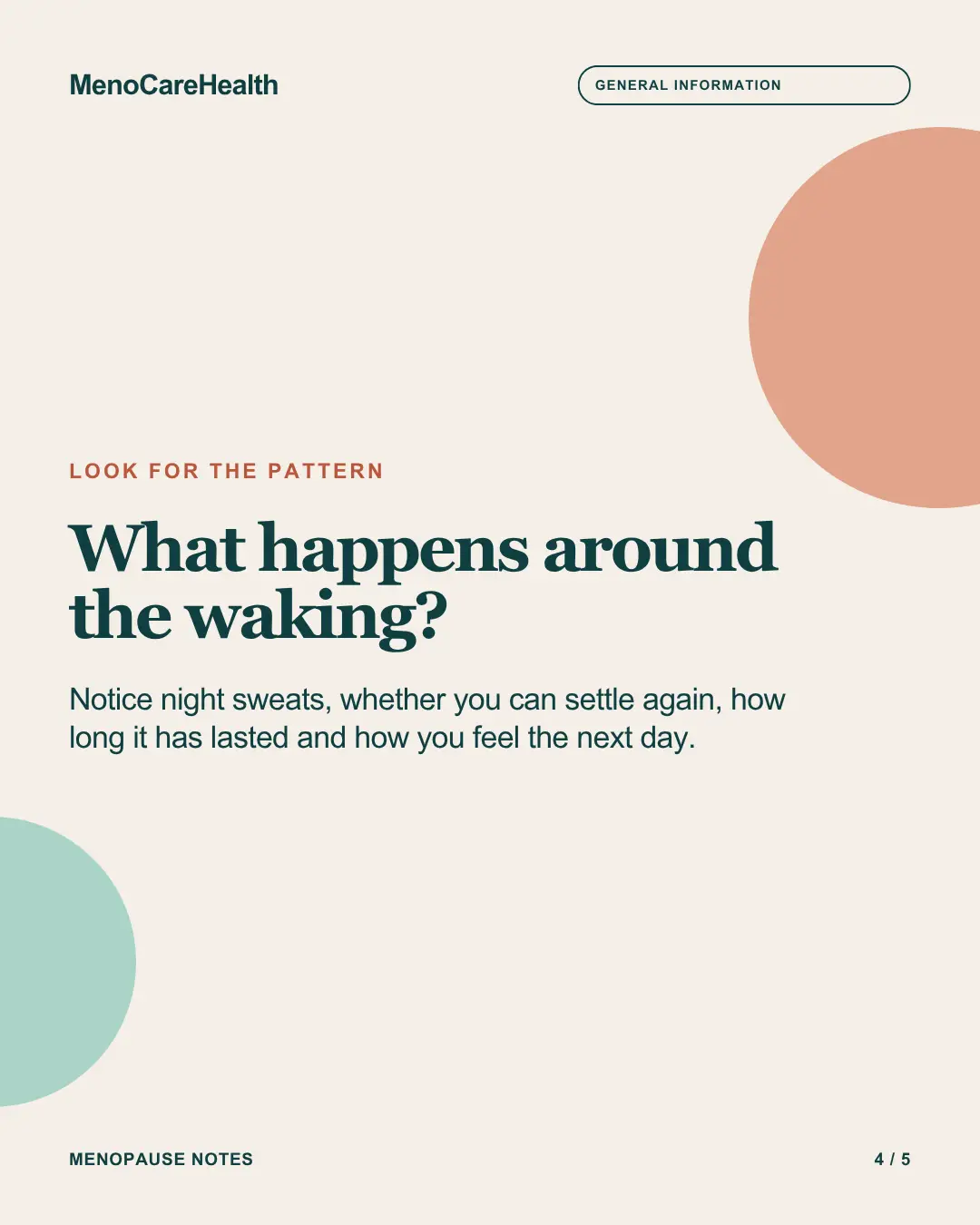
A more useful question is what happens around the waking. Are you sweating? Can you settle again? How long has it been happening? How do you feel the next day?
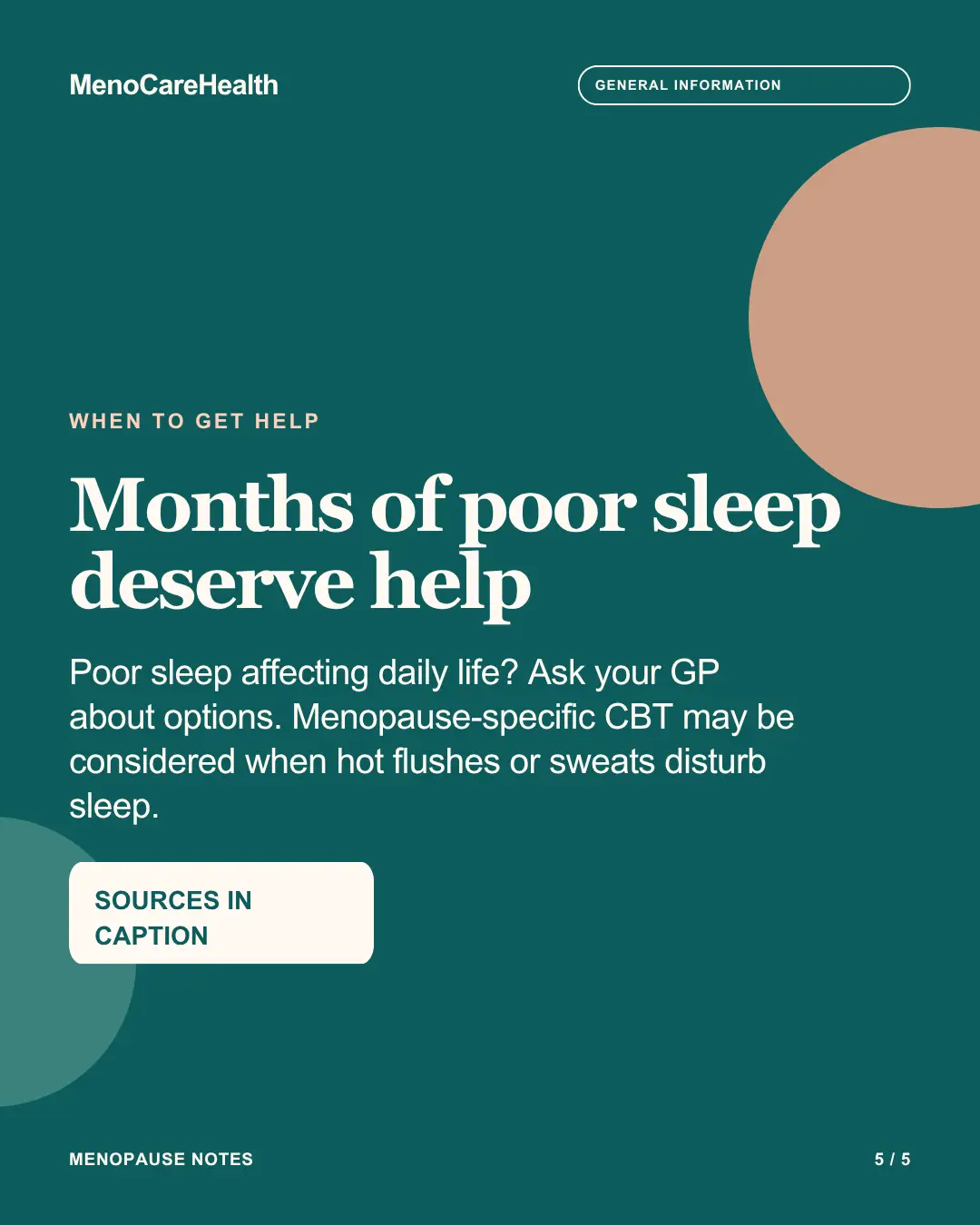
NICE says menopause-specific cognitive behavioural therapy (CBT), a type of talking therapy, can be considered for sleep problems linked with hot flushes or sweats. It is an option, not a promise, and it may be discussed alongside other care.
If poor sleep is affecting daily life, speak to your GP.
Save this for the next tired morning when the clock is getting blamed.
Please do not post personal health details in comments or ordinary social messages.
Sources checked 18 August 2026:
– NHS, Symptoms of menopause and perimenopause: https://www.nhs.uk/conditions/menopause-and-perimenopause/symptoms/
– NICE guideline NG23, recommendation 1.5.24: https://www.nice.org.uk/guidance/ng23/chapter/Recommendations